

Mổ Cataract – CATARACT SURGERY
ngày 5.10.26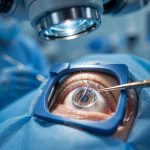
MỔ CATARACT
Chuyện nhỏ mà không nhỏ chút nào
Có những chuyện người ta làm rất nhẹ nhàng, bình thản, thậm chí làm xong còn chẳng buồn kể lại. Ví dụ như mổ cataract, chẳng hạn. Bạn bè tôi đã có nhiều người đã mổ cataract. Số đông thành công, số ít không như ý muốn, đôi khi còn mờ hơn!
Có mấy người thì nói, “Có gì đâu! Chỉ 15 phút, nằm xuống, bác sĩ làm rẹt rẹt, về nhà nhỏ thuốc, vài ngày sau thấy rõ như hồi còn trẻ.”
Nghe họ kể, tôi cũng thấy… khuyến khích. Nhưng khi nhớ lại mấy người “bán than” thì lo sợ. Tôi biết, mỗi thể trạng con người mỗi khác, hên xui mỗi khác. Nhưng họ nói những điều đó chỉ là nói về mắt của họ. Còn đây là mắt của tôi. Mà mắt đối với tôi không phải chỉ để nhìn đường sá khi lái xe, hay để nhìn người đẹp cho rõ, hay đọc thực đơn trong nhà hàng. Mắt của tôi chính là cái “văn phòng” cuối cùng của đời tôi.
Bây giờ, thú vui của tôi cũng chẳng còn bao nhiêu; ngoài đi đây đi đó thăm viếng bạn bè; thì giờ còn lại – nói đúng hơn là ngồi thiền internet cả ngày – là để miệt mài ngồi mài đũng quần viết văn, làm thơ, soạn nhạc thay vì làm hội viên danh dự cho Hội ACCC(*) . Nói cho sang thì đó là đời sống tinh thần. Nói thật hơn một chút thì… đó là những thứ còn lại để tôi ngồi lì trước computer mà không bị nhà tôi quạu quọ, hoặc bị sai quét nhà rửa chén. Cho nên, nếu một ngày đẹp trời nào đó tôi đi mổ mắt, rồi chẳng may không được tốt số thì… ôi thôi ai tai! “Tàn đời cô Lựu!”
Không đi đây đi đó thì đôi chân nó hành, cái đầu nó nản. Không còn đủ sức thơ văn nhạc nữa thì cuộc sống sẽ vô nghĩa biết chừng nào. Nghĩ tới lúc “ta sẽ ra sao với phần đời buồn bã còn lại” thì giật mình, lo sợ. Do đó, tôi cứ… drag my feet mấy năm qua.
Có một số bạn đã mổ rồi cứ xúi tôi, “Mổ đi! Có gì đâu mà sợ!” Mỗi lần nghe xong lại muốn “go forward” nhưng rồi khi về nhà lại tiếp tục sợ. Cho đến một ngày, nhận ra, mắt càng ngày càng mờ. Nhìn xa bắt đầu như nhìn qua một lớp sương mỏng. Ban đêm thì ánh đèn xe cộ trở thành những đốm sáng khó chịu. Tôi không còn dám lái xe ban đêm. Nhưng điều oái oăm là tôi đọc chữ nhỏ trên điện thoại, trên computer rất rõ. Thế mới cứ dằng dai!
Một ông già có thể ngồi hàng giờ trước computer viết văn, làm thơ, soạn nhạc; nhưng bước ra ngoài đường thì lại phải nheo mắt nhìn thiên hạ. Cuối cùng tôi đành phải tự thuyết phục mình, “Thôi đi mổ mắt đi cha nụi😜” Ừ thì đi mổ.
Cũng may, cataract surgery không phải là một cuộc tổng tấn công cùng lúc vào cả hai con mắt. Hai mắt thường được làm ở những thời điểm khác nhau. Đối với một người nhát… à quên, thận trọng, như tôi, chuyện đó có một tác dụng tâm lý rất lớn. Tôi tự nhủ, “Thôi thì làm một con trước. Nếu chẳng may có mệnh hệ gì… mình vẫn còn một con.” Nói nghe hơi bi quan, nhưng chính cái suy nghĩ ấy lại giúp tôi có thêm động lực.
Rồi ngày mổ cũng đến.
Trước đó là cả một danh sách những chuyện phải nhớ: kính mát, thuốc phải mua sẵn, những loại thuốc nhỏ mắt phải dùng theo đúng chỉ định, lịch hẹn trước và sau mổ, rồi ngày giải phẫu phải theo đúng hướng dẫn của bác sĩ về ăn uống và thuốc men. Người ta yêu cầu ngưng ăn uống ít nhất khoảng sáu giờ trước, quần áo giản tiện, cần có người thân đi theo để đưa về, và thời gian chờ đợi khoảng hơn hai tiếng. Tôi đọc những hướng dẫn ấy rất kỹ. Không phải vì tôi muốn trở thành bác sĩ mà vì tôi là một bệnh nhân lo xa.
Chúng tôi đến cơ sở giải phẩu theo chỉ dẫn sớm hơn. Chờ đợi đến khi được gọi tên. Vào phòng mổ, làm tất cả thủ tục gồm đặt ống cho thuốc vào tay, gây tê/mê locally, và chờ đợi khoảng 45 phút trước khi đưa tới phòng với bác sĩ. Bác sĩ “xẹt xẹt” khoảng hơn 15 phút, có cảm thấy đau đau một chút. Xong, đẩy ra khỏi phòng và giao tôi cho nhà tôi đưa về. Đơn giản như đang giỡn!
Sau khi mổ, phần còn lại tưởng chừng đơn giản nhưng lại rất nhiễu nhương và nghiêm túc. Nhỏ cả 3 loại thuốc theo lời dặn, đúng giờ, đúng liều. Ăn uống, ngủ nghỉ theo lời dặn. Cấm giụi mắt, cấm cúi thấp, không xách, mang gì quá 5lbs, không làm bất cứ điều gì có thể tạo áp lực lên mắt, mang kính che khi ngủ… Đã vậy, nhà tôi còn canh chừng từng chút, không được tự do với computer và phone như thường lệ!
Rồi đi tái khám một ngày sau, rồi một tuần sau. Nhưng giữa tuần tôi vẫn không thấy gì với con mắt mổ, lo quá, gọi Bác sĩ xin tới văn phòng tái khám. Bác sĩ vui vẻ cho hẹn tới ngay, ông ấy xem qua nói… không sao, có tiến triển tốt!
Nói chung, cataract surgery tuy là một thủ thuật thường gặp và nhìn chung rất an toàn, nhưng nó vẫn là một cuộc giải phẫu thật sự, và việc theo dõi sau mổ là một phần quan trọng của quá trình hồi phục.
Và rồi điều kỳ diệu xảy ra. Sau khoảng một tuần, tôi nhìn xa rõ hơn rất nhiều. Cái thế giới trước mắt bỗng nhiên sáng sủa, rõ nét ra khi tôi nhắm con mắt chưa mổ. Nhưng khi nhìn vào màn hình điện thoại, màn ảnh computer, tập sách… ôi, một cõi mù sương! Chỉ khi tôi nhắm con mắt mổ thì mới đọc được như tình trạng trước khi.
Ngày tôi tái khám lần thứ ba, tôi hỏi bác sĩ, “Doctor, tại sao trước khi mổ tôi đọc gần rất rõ, mà bây giờ lại không thấy?”
Bác sĩ giải thích cho tôi một điều mà trước đó tôi chưa hiểu hết, “Loại thủy tinh thể nhân tạo được chọn có mục tiêu chính là giúp nhìn xa rõ, còn khả năng nhìn gần sau mổ phụ thuộc vào loại lens được lựa chọn và những yếu tố khúc xạ khác. Một số loại lens cao cấp có thể được gắn vào để giảm nhu cầu đeo kính cho cả xa lẫn gần, nhưng đó là một lựa chọn khác và thường có chi phí khá cao.”
Tôi hỏi, “Vậy muốn nhìn xa và nhìn gần như hồi còn trẻ thì sao?”
“Cần mang kính để đọc. Kính có thể mua bất cứ nơi đâu, không cần toa Bác sĩ, còn hơn là tốn thêm khoảng $4000 một mắt. Loại nầy bảo hiểm không trả. Thường thì rất ít người chịu chi số tiền nầy.”
Tôi im lặng một lúc lâu, rồi hỏi, “Vậy tôi có thể không mổ con mắt còn lại, vì như thế tôi có thể nhìn được cả xa và gần?”
Bác sĩ nói, tạm thời cũng có thể được nhưng có thể không được lâu; một bên xa, một bên gần sẽ làm cho hai mắt luôn luôn điều tiết mệt mỏi, sẽ không phải là một chọn lựa lâu dài, trước sau gì cũng phải mổ thôi.”
Tôi vẫn bâng khuâng chưa có quyết định dứt khoát. Về nhà hỏi ý kiến nhà tôi. Nhà tôi cũng nói y như vậy, “Trước sau gì cũng phải mổ.” Dù vậy, tôi vẫn nghiêng về việc chậm mổ con còn lại… chỉ vì ghét mang kính! Từ nhỏ tới giờ, tôi vẫn thích cái cảm giác mắt mình nhìn thẳng vào thế giới mà không có một thứ gì đứng giữa.
Thế nhưng…
Càng ngày điểm mù bên con mắt còn lại càng rõ. Nhắm con mắt mổ, thấy màu vàng, đọc vẫn rõ; nhắm con mắt chưa mổ thấy xa rất sắc nét với màu trắng.
Bây giờ tôi đứng trước một sự lựa chọn rất giản dị. Một là bỏ thêm một số tiền khá lớn để giảm nhu cầu đeo kính. Hai là chấp nhận một cặp reading glasses. $8000+ trong thời gạo châu củi quế không dễ với số lương hưu ít ỏi. Thôi thì… đành!
Ngày trước mình chọn những gì mình thích. Bây giờ mình chọn những gì hợp lý, hợp tình vậy. Và thế là tôi chuẩn bị bước vào cuộc mổ con mắt thứ hai… một tuần nữa.
Vẫn là những giấy tờ, tiền bạc, thuốc men như lần trước. Tôi sẵn sàng – không còn hồi hộp, tính toán gì thêm – để vào cuộc thay đổi mà không có chọn lựa nào tốt hơn! Và lần nầy tôi sẵn sàng hơn lần trước.
Tôi viết lại câu chuyện này không phải để khuyên mọi người phải đi mổ cataract. Cataract có cần mổ hay chưa, khi nào mổ, chọn loại lens nào, có cần kính sau mổ hay không… đều là những chuyện nên bàn kỹ với bác sĩ mắt của mình. Không phải ai có cataract cũng cần mổ ngay; quyết định thường dựa trên mức độ ảnh hưởng của thị lực đối với sinh hoạt, công việc và đời sống hằng ngày của từng người.
Tôi chỉ muốn kể một chuyện rất riêng của mình. Nếu bạn cũng đang drag your feet vì sợ mổ mắt, thì tôi hiểu. Tôi đã drag my feet còn lâu hơn bạn nhiều. Nếu bạn đang lo, thì lo cũng chẳng có gì khác người. Ai mà không lo khi quyết định thay đổi vận mệnh của cặp “cửa sổ tâm hồn.”
Nhưng cũng đừng vì sợ mà cứ để thế giới trước mắt mình ngày càng chìm vào sương khói. Khi cataract bắt đầu ảnh hưởng đến những sinh hoạt quan trọng như đọc sách, lái xe hoặc xem TV, nhất là không còn nhìn được người đẹp thì là một thua thiệt không nên có 😜.
Còn riêng tôi, tôi đang chuẩn bị cho con mắt thứ hai. Và tôi đã chuẩn bị tinh thần cho một cuộc hy sinh vĩ đại – Đeo reading glasses. Thôi thì cũng chẳng sao. Miễn là còn đọc được. Còn viết được. Còn làm thơ. Còn soạn nhạc được thì một cặp kính nhỏ trên sống mũi…cũng chưa đến nỗi “tàn đời cô Lựu”.
Cuối tháng 9/2026
—-
ACCC(*) = Ăn Chơi CHờ Chết

CATARACT SURGERY
A Small Matter That Is Anything But Small
There are things people do so casually and calmly that, once they are done, they hardly even bother mentioning them. Cataract surgery, for example. Quite a few of my friends have already had it. Most came through with flying colors; a few did not fare quite as well—some even said their vision seemed blurrier afterward!
A few of them told me, “What’s the big deal? Fifteen minutes, that’s all. You lie down, the doctor does a little snip-snip, you go home, use your eye drops, and a few days later you see as clearly as you did when you were young.”
Hearing them say that was certainly encouraging. But then I would remember those who had “their bad experienced” to share, and the fear would return. I know that every person is different, every body reacts differently, and luck is always part of the equation. But all of that was about their eyes. This was about mine. And my eyes are not merely for seeing the road while driving, admiring beautiful women more clearly, or reading a restaurant menu. My eyes are, in fact, the final “office” of my life.
These days, I don’t have all that many pleasures left. Apart from going here and there to visit friends, the rest of my time—or, to put it more accurately, my all-day meditation on the Internet—is spent wearing out my seat at the computer, writing prose, composing poetry, and making music, rather than becoming an honorary member of the ACCC** Association. Put elegantly, I suppose one could call it my spiritual life. Put more honestly, these are the things I have left to do sitting stubbornly in front of my computer without having my wife grow irritated with me or send me off to sweep the floor and wash the dishes. So if, on some beautiful day, I went in for eye surgery and, by some cruel twist of fate, things did not turn out well… oh, dear Lord! I would be finished. “Tàn đời cô Lựu!”—in other words, my life would be ruined!
Without going here and there, my legs complain; without writing, poetry, and music, my mind grows discouraged. If I no longer had the strength to write, make poems, or compose music, how meaningless life would become. The thought of “What will become of me for the sad years I have left?” would suddenly jolt me awake with fear. And so, for years, I kept… dragging my feet.
Quite a few friends who had already undergone the surgery kept urging me, “Go ahead! What are you afraid of?” Every time I heard that, I would feel ready to “go forward,” but once I got home, I would go right back to being afraid. Until one day, I realized that my vision was growing blurrier by the month. Distant objects began to look as though I were seeing them through a thin veil of fog. At night, the lights of passing cars became irritating little blobs of brightness. I no longer dared to drive at night. And yet, ironically, I could still read the tiny print on my phone and computer perfectly well. That was exactly why I kept putting it off!
An old man can sit for hours in front of a computer writing prose, composing poetry, and making music; but the moment he steps outside, he has to squint just to look at the world. Finally, I had to talk myself into it: “Come on, old man, go get your eye fixed. 😜” So, all right then. Off to surgery.
Fortunately, cataract surgery is not a full-scale assault on both eyes at the same time. The two eyes are usually treated at different times. For someone timid—excuse me, I mean cautious—like me, that distinction had enormous psychological value. I told myself, “Fine. I’ll do one eye first. If, heaven forbid, something happens… at least I’ll still have the other one.” It may sound rather pessimistic, but somehow that very thought gave me the courage to move forward.
Then the day of surgery arrived.
Beforehand, there was an entire list of things to remember: sunglasses, medications to have ready, the various eye drops to be used exactly as instructed, appointments before and after surgery, and, on the day itself, following the doctor’s instructions concerning food, drink, and medications. I was told not to eat or drink for at least about six hours beforehand, to dress simply, and to have someone accompany me and drive me home. There was also the prospect of waiting more than two hours. I read every instruction very carefully. Not because I wanted to become a doctor, but because I was a patient—a patient who worries about everything.
We arrived at the surgical center earlier than instructed. Then we waited until my name was called. In the procedure room, they went through all the formalities: an IV was placed in my hand, local anesthesia was administered, and I waited about forty-five minutes before being taken in to see the doctor. The doctor “snipped and swished” for a little over fifteen minutes, and I did feel a bit of discomfort. Then they wheeled me out and handed me over to my wife to take me home. Simple as a joke!
After surgery, the part that seemed as though it should be simple turned out to be both complicated and serious. Three different medications had to be used exactly as instructed, at the right time and in the right dosage. Eating and sleeping had to follow the doctor’s instructions. No rubbing the eye, no bending too low, no lifting or carrying anything over five pounds, no activity that might put pressure on the eye, and even a protective shield over the eye while sleeping. And on top of all that, my wife kept watch over me every step of the way. I was no longer free to use my computer and phone as I pleased!
Then came the follow-up appointment the next day, and another one a week later. But in the middle of that week, I still could not see well with the operated eye, and I became so worried that I called the doctor’s office and asked to come in for another examination. The doctor kindly gave me an appointment right away. He examined my eye and said… nothing was wrong. Everything was progressing well!
In general, although cataract surgery is a common procedure and is generally considered very safe, it is still real surgery, and post-operative follow-up is an important part of the recovery process.
And then the miracle happened. After about a week, my distance vision was dramatically clearer. The world in front of me suddenly became bright and sharply defined when I closed my unoperated eye. But when I looked at my phone, my computer screen, or a book… oh, what a foggy world! Only when I closed the operated eye could I read as well as I had before the surgery.
At my third follow-up visit, I asked the doctor, “Doctor, why was I able to read very clearly up close before the surgery, but now I can’t see anything?”
The doctor explained something I had not fully understood before: “The intraocular lens that was selected is primarily intended to give you clear distance vision. How well you see up close after surgery depends on the type of lens chosen and other refractive factors. There are some premium lenses that can be implanted to reduce the need for glasses for both distance and near vision, but that is a different option and usually comes at a considerably higher cost.”
I asked, “So if I want to see both far away and up close the way I did when I was young, what then?”
“You need reading glasses. You can buy them almost anywhere without a prescription. That is far better than spending another four thousand dollars per eye. Insurance does not cover that type, and very few people are willing to spend that kind of money.”
I remained silent for quite a while, then asked, “Then could I simply not have the other eye operated on? That way, I could see both near and far.”
The doctor said that, for the time being, I could do that, but it might not work for long. Having one eye for distance and the other for near would keep the two eyes constantly working differently and could lead to fatigue. It would not be a good long-term solution. Sooner or later, I would probably have to have the other eye done anyway.
I was still hesitant and had not made up my mind. When I went home and asked my wife what she thought, she said exactly what the doctor had said: “Sooner or later, you’re going to have to do it.” Even so, I still leaned toward delaying the second surgery… simply because I hate wearing glasses! Ever since I was young, I have loved the feeling of looking directly at the world without having anything standing between my eyes and what I see.
And yet…
The blind area in the unoperated eye became more and more obvious. When I closed the operated eye, everything looked yellowish, but I could still read clearly; when I closed the unoperated eye, distant objects appeared remarkably sharp, with a whiter clarity.
Now I am faced with a very simple choice. One: spend a substantial amount of additional money to reduce my dependence on glasses. Two: accept a pair of reading glasses. Spending more than $8,000 in these expensive times, on a modest pension, is not easy. So… I guess I’ll just have to accept it!
Once upon a time, we chose what we liked. Now we choose what is reasonable—and what makes sense. And so I am preparing to undergo surgery on the second eye… one week from now.
It will be the same paperwork, the same bills, the same medications as last time. I am ready—without the same nervousness and without any more calculations—to step into this change, because I have not found a better choice. And this time, I am more ready than I was before.
I am writing this story not to tell everyone that they should have cataract surgery. Whether cataracts need to be treated, when to have surgery, which type of lens to choose, and whether glasses will be needed afterward are all matters that should be discussed carefully with your eye doctor. Not everyone with cataracts needs surgery right away; the decision generally depends on how much the vision problem affects that individual’s daily activities, work, and quality of life.
I simply want to share a very personal story. If you, too, are dragging your feet because you are afraid of eye surgery, I understand. I dragged my feet much longer than you probably have. And if you are worried, there is nothing strange about that. Who would not be nervous when deciding to change the fate of a person’s two “windows to the soul”?
But do not let fear keep the world before your eyes sinking deeper and deeper into fog. When cataracts begin to interfere with important activities such as reading, driving, or watching television—and especially when you can no longer see beautiful people clearly—that is a loss you really do not need to accept. 😜
As for me, I am preparing for surgery on my second eye. And I have prepared myself for one great sacrifice—wearing reading glasses. Well, I suppose it is not the end of the world. As long as I can still read. As long as I can still write. As long as I can still compose poetry. As long as I can still make music. Then a little pair of glasses sitting on the bridge of my nose… is not quite enough to make it “tàn đời cô Lựu” after all.
Late September 2026
——-
(**) ACCC => It’s an old people’s joke => just eat and play, and waiting to die😜
| « VIẾT CHO CHÁU NGOẠI Y-THANH | TRANG NHÀ |
