

Giới thiệu ca khúc “Võ Đắt…” …History of Võ Đắt
ngày 14.04.26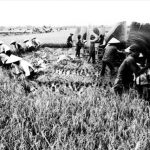
VÕ ĐẮT – MỘT THỜI KHAI HOANG
Có những miền đất không chỉ được dựng nên bằng cuốc xẻng, mà bằng cả một đời người. Võ Đắt, một cái tên nghe qua tưởng chừng xa lạ, lại là nơi bắt đầu của biết bao giấc mơ, biết bao phận người rời quê cũ để đi tìm một tương lai mới.
Câu chuyện của ca khúc này bắt đầu từ cuối thập niên 1950’s – khi những gia đình miền Trung, bỏ lại sau lưng người thân, nắng gió và cả những thiên tai bão lụt, đã lên đường theo chương trình dinh điền của cố Tổng Thống Ngô Đình Diệm. Họ rời làng xóm thân quen, rời mái trường, rời tuổi thơ… để bước vào một vùng đất còn hoang sơ, nơi rừng sâu chưa dấu chân người, nơi đất đỏ bụi mù phủ kín cả những ngày đầu tiên đặt chân đến.
Trong ký ức ấy, có hình ảnh một đoàn xe dừng lại giữa chiều tối lặng lẽ. Có người cha bước xuống trước tiên, đứng lặng giữa miền đất lạ… Đó là một dấu mốc mở ra cả một cuộc đời mới. Chung quanh là những mái nhà lá vách ván vừa dựng vội, những gốc cây còn trơ mình sau khi bị ủi đổ, và một tương lai chưa ai biết sẽ đi về đâu.
Nhưng chính từ nơi khắc nghiệt đó, cuộc sống đã nảy mầm.
Từng giọt mồ hôi rơi xuống đất đỏ, từng luống sắn, từng thửa ruộng, nương rẫy được mở ra. Những đêm đèn dầu leo lét, những ngày đi lấy nước từ con suối xa, những tiếng trẻ thơ học bài giữa trưa nắng… tất cả đã dệt nên một tuổi thơ vừa gian khó, vừa trong veo đến lạ.
Võ Đắt, từ một vùng rừng núi bạt ngàn, đã dần trở thành xóm làng, rồi thành quê hương. Những con người tay trắng ngày nào, bằng ý chí và tình thương, đã xây dựng nên một cuộc đời mới không chỉ cho riêng họ mà cả tương lai cho các thế hệ mai sau.
“Võ Đắt – Một Thời Khai Hoang” không chỉ là một bài hát đơn thuần mà là một lời kể. Một lời nhắc nhớ. Và cũng là một tấm lòng tri ân gửi đến những người đã đi trước – những con người bình dị nhưng đã sống một cuộc đời phi thường. Để hôm nay, khi nhắc lại hai tiếng “Võ Đắt”, ta không chỉ nhớ về một vùng đất… mà còn nhớ về một thời không bao giờ quên.

Ngày tôi viết bài hát “Võ Đắt Một Thời Khai Hoang”, cũng là lúc những ký ức cũ bất chợt trở về như một cuốn phim chậm. Tôi nhớ Ba Mẹ tôi — cả hai nay đã đi xa — nhớ tuổi thơ nghèo khó của một gia đình đông con, nhớ vùng đất đỏ thuộc tỉnh Bình Tuy, Quận Tánh Linh năm nào, và nhớ quê hương mà tôi đã lìa xa suốt hơn nửa thế kỷ.
Bài hát không chỉ là một câu chuyện riêng của gia đình tôi, mà còn là hình ảnh của biết bao gia đình Việt Nam trong thời kỳ khẩn hoang, dinh điền dưới thời cố Tổng Thống Ngô Đình Diệm. Khi chính quyền phát động chương trình đưa dân nghèo vào những vùng rừng núi hoang vu để lập nghiệp, Võ Đắt chỉ là một cái tên xa lạ giữa đất đỏ, bụi mù và rừng cây bạt ngàn.
Gia đình tôi thật ra không thuộc diện quá nghèo. Ba Mẹ tôi sống tuy chật vật nhưng vẫn có nhà, vẫn có thửa ruộng nhỏ, nhất là còn nhiều bà con thân thuộc quanh mình. Chính vì vậy, Ba tôi đã rất do dự. Ông không nỡ rời bỏ đại gia đình bên nội đang sống gần nhau bao đời. Nhưng Mẹ tôi — người phụ nữ mạnh mẽ và quyết đoán — đã chọn ra đi vì tương lai của bảy đứa con. Bà tin rằng chỉ có ra đi theo chương trình khẩn hoang lập ấp được chính phủ tài trợ ở một vùng đất mới thì con cái mới có tương lai.
Năm 1958, một đoàn xe chở nhiều gia đình tiến vào vùng đất mới, và Cha tôi là người đứng ra vận động, cổ vũ bà con lối xóm cùng đi. Trong ký ức tôi và cũng qua lời kể của Ba Mẹ, buổi chiều hôm ấy thật buồn và hoang vu. Trời tranh tối tranh sáng. Khi đoàn xe dừng lại, Cha Mẹ tôi là những người đầu tiên bước xuống xe. Trước mắt họ chỉ là một con đường đất đỏ duy nhất, hai bên lộ đất đỏ vừa tạo thành là hai dãy nhà tranh vách đất vừa dựng lên chưa lâu. Khắp mặt đất là những gốc cây nhỏ bị ùi còn nhọn hoắt chĩa lên trời như dấu tích của cánh rừng vừa bị khai phá.
Mỗi gia đình được cấp một căn nhà nhỏ trên phần đất hai sào. Nhà tôi đông người, nên Cha Mẹ quyết định tách thành hai hộ để đủ chỗ cho chín người sinh sống. Những ngày đầu nơi ấy vô cùng cực khổ. Thiếu nước, thiếu điện, thiếu đủ mọi thứ. Người lớn đi khai đất, trồng mì, trồng bắp; trẻ con theo nhau ra suối gánh nước, hoặc sắp hàng quanh vài giếng nước máy mà đôi khi nước được bơm lên đỏ lòm. Ban đêm, cả nhà quây quần bên ngọn đèn dầu leo lét giữa tiếng côn trùng và gió rừng hun hút.
Nhưng điều kỳ lạ nhất là sức sống và ý chí của con người. Chỉ sau một thời gian không lâu, bằng sự chịu thương chịu khó, bằng mồ hôi và đôi tay trắng, những người dân năm ấy đã biến vùng đất hoang vu thành xóm làng trù phú. Ruộng rẫy dần xanh lên. Tiếng trẻ con vang lên trên những con đường đất đỏ. Rồi từng đoàn người từ miền Trung — Quảng Bình, Quảng Trị, Quảng Nam, Quảng Ngãi, Bình Định — tiếp tục được đưa vào lập nghiệp, hình thành thêm những vùng dinh điền khác như Võ Xu, Sùng Nhơn…
Trong tôi, Võ Đắt không chỉ là một địa danh. Đó là biểu tượng của sự hy sinh của thế hệ Cha Mẹ. Là nơi những con người tay trắng đã đánh đổi tuổi trẻ, mồ hôi và cả nước mắt để dựng nên tương lai cho con cháu mình. Những câu hát trong bài vì thế mang đầy hồi ức:
“Con đường đất đỏ… chơ vơ
Gió thốc… bụi đất mù bay…”
Hay:
“Từ đôi tay trắng… năm nào
Gieo xuống… bao nhiêu khát khao…”
Mỗi câu chữ đều là một phần ký ức thật. Có tiếng cuốc vang trong sớm mai. Có những buổi đi lấy nước nơi con suối xa nhà. Có bóng Mẹ lom khom trồng thêm luống sắn. Có dáng Cha cày cuốc dưới nắng gắt cao nguyên. Và có cả niềm tự hào khi vùng đất năm xưa cuối cùng đã trở thành phố xá đông vui, thành quê hương của biết bao thế hệ.
Hơn 51 năm xa quê, mỗi lần nhớ lại Võ Đắt, lòng tôi vẫn nghe nguyên mùi đất đỏ sau cơn mưa, vẫn thấy ánh đèn dầu leo lét trong đêm, vẫn nghe tiếng người gọi nhau giữa xóm nghèo mới dựng. Và trên tất cả, tôi nhớ Ba Mẹ tôi — những con người bình dị đã dám rời bỏ quê cũ, xa lìa người thân để bước vào một vùng đất xa lạ, hoang vu với hai bàn tay trắng, chỉ vì tương lai đàn con.
Bài hát này, vì thế, là một nén hương lòng dành cho Ba Mẹ tôi, dành cho những người dân khẩn hoang năm cũ, và dành cho một quê hương mang tên Võ Đắt — “một thời… khai hoang.” Và đặc biệt gửi lại cho con cháu đời sau biết được nguồn gốc của mình.
VÕ ĐẮT — A PIONEERING AGE
There are lands shaped not merely by spades and pickaxes, but by the sacrifice of entire lives. Võ Đắt — a name that may sound distant to unfamiliar ears — was once the birthplace of countless dreams, a refuge for so many souls who left their old villages behind in search of another future.
The story behind this song begins in the late 1950s, when families from Central Vietnam departed from their loved ones, from the fierce sun and winds of their homeland, and from the endless floods and storms that had long burdened their lives. Following the resettlement program established under President Ngô Đình Diệm, they journeyed toward an untamed wilderness. They left behind familiar villages, schoolyards, and the innocence of childhood to enter a land still wrapped in forest silence — a place where few human footsteps had ever passed, where clouds of red dust swallowed the very first days of arrival.
In those memories remains the image of a convoy stopping quietly at dusk. A father steps down first from the truck and stands in silence before an unfamiliar horizon. It was the moment an entirely new life began. Around him stood hastily built shacks roofed with leaves and rough planks, uprooted trees lying bare after the bulldozers had passed, and a future no one could yet imagine.
And yet, from that harsh and lonely soil, life slowly took root.
Drops of sweat darkened the red earth. Cassava rows appeared one by one. Fields and farms were carved from wilderness. There were nights lit only by dim kerosene lamps, days spent carrying water from distant streams, and the voices of children reciting their lessons beneath the blazing noon sun. Together, these fragments wove a childhood marked equally by hardship and by a strange, translucent innocence.
Võ Đắt, once an endless stretch of mountain forest, gradually became a settlement, then a village, and finally a homeland. Those people who had arrived empty-handed built, through sheer endurance and love, not only new lives for themselves, but a future for generations yet to come.
“Võ Đắt — A Pioneering Age” is more than a song. It is a remembrance. A quiet testimony. And above all, it is an offering of gratitude to those who came before us — ordinary people who lived extraordinary lives.
So today, when the name “Võ Đắt” is spoken once more, we remember not only a piece of land, but an entire era that time can never erase.
…and more details…
The day I wrote the song “Võ Đắt — A Pioneering Age” was also the day old memories unexpectedly returned, unfolding slowly like a faded motion picture. I remembered my parents — both now long gone — and the poverty-stricken childhood of a large family struggling to survive. I remembered the red-soil lands of Bình Tuy Province, Tánh Linh District, as they once were, and the homeland I have lived apart from for more than half a century.
This song is not merely the story of my own family. It is also the reflection of countless Vietnamese families during the era of frontier settlement and agricultural resettlement under President Ngô Đình Diệm. When the government launched programs to move impoverished families into remote wilderness areas to begin new lives, Võ Đắt was little more than an unfamiliar name amid clouds of red dust, endless forests, and untamed land.
In truth, my family was not among the poorest. My parents lived modestly, but we still had a home, a small rice field, and above all, a large extended family nearby. For that reason, my father hesitated deeply. He could not bear the thought of leaving behind generations of relatives who had lived close together for so long. But my mother — strong-willed and resolute — chose to leave for the sake of her seven children. She believed that only by joining the government-sponsored resettlement program in a new land could her children hope for a better future.
In 1958, a convoy carrying many families entered the new settlement area, and my father was among those who encouraged neighbors and relatives to join the journey. In my memory — and in the stories my parents later recounted — that evening felt unbearably desolate. Twilight hovered uncertainly between light and darkness. When the convoy finally stopped, my parents were among the first to step down from the truck. Before them stretched only a single red dirt road. Along both sides stood rows of newly erected thatched huts with earthen walls. Everywhere across the ground were jagged tree stumps protruding upward like remnants of a forest only recently torn away.
Each family was given a small house on a modest plot of land. Because ours was such a large household, my parents divided us into two separate family registrations so that nine people could somehow fit and survive. Those first days were unimaginably difficult. There was little water, no electricity, and shortages of nearly everything. The adults cleared land and planted cassava and corn, while the children carried water from distant streams or waited in line beside communal pumps whose water sometimes ran red with mud. At night, the entire family gathered around the faint glow of a kerosene lamp while insects cried in the darkness and cold winds swept through the forest.
Yet the most remarkable thing was the resilience of the human spirit.
Before long, through perseverance, sacrifice, and bare hands hardened by labor, those settlers transformed the wilderness into thriving villages. Fields gradually turned green. Children’s voices echoed along the red dirt roads. More families from the central provinces — Quảng Bình, Quảng Trị, Quảng Nam, Quảng Ngãi, Bình Định — continued arriving to establish new settlements such as Võ Xu and Sùng Nhơn.
To me, Võ Đắt is far more than a geographical name. It is a symbol of my parents’ sacrifices — a place where people who possessed almost nothing gave their youth, sweat, and tears to build a future for their descendants. That is why every lyric in the song carries the weight of lived memory:
“That lonely road of red earth…
Wind whipping clouds of dust into the sky…”
Or:
“From empty hands long ago…
So many dreams were sown…”
Every line comes from real remembrance. There is the sound of hoes striking earth at dawn. There are long walks to fetch water from streams far from home. There is the image of my mother bent quietly over another row of cassava plants. There is my father laboring beneath the harsh highland sun. And there is also the quiet pride of seeing that once-barren land eventually become bustling towns and the homeland of generations that followed.
Even after more than fifty-one years away from Vietnam, whenever I think of Võ Đắt, I can still smell the red earth after the rain. I still see the dim kerosene lamps flickering in the night. I still hear neighbors calling to one another across those newly built settlements. Above all, I remember my parents — ordinary people who dared to leave behind their homeland, their relatives, and everything familiar to step into an unknown wilderness with nothing but their bare hands, all for the future of their children.
This song, therefore, is an offering of remembrance to my parents, to the pioneering settlers of those years, and to a homeland called Võ Đắt — “a pioneering age.” Most importantly, it is left behind for future generations, so that they may know where they came from, and understand the roots from which their lives first grew.
| « O Dỏ Của Tui – MA PETITE O – My Little O | TRANG NHÀ | Tháng Tư Hận, Tháng Tư Đau » |
